


SEO, known as Search Engine Optimization, is a digital marketing channel that focuses on driving traffic to a website through improving its visibility on SERPs (Search Engine Result Pages). In recent years, many companies have incorporated AI into their SEO strategies, and using AI has become an essential part of maintaining successful search strategies.
The availability of competent generative AIs, like ChatGPT, is creating a massive shift in the way that individuals search for information online. Companies must ensure that they can generate effective content for all their target audiences’ search results, which includes using effective keywords, optimizing link structure, building relationships with influencers and developing engaging user experiences.
The process of checking your website for compliance with modern SEO techniques to ensure that it meets all the criteria for maximising visibility in AI-driven search results requires the use of a checklist. Using a checklist allows you to identify and document potential ranking opportunities and better protect your company against competing websites.
The Ultimate AI SEO Checklist
Using an AI-based SEO checklist combines best practices from both traditional SEO and modern tools. The printable document is designed to help you create a successful SEO strategy for your company.
1. Understand What Your Audience Asks AI
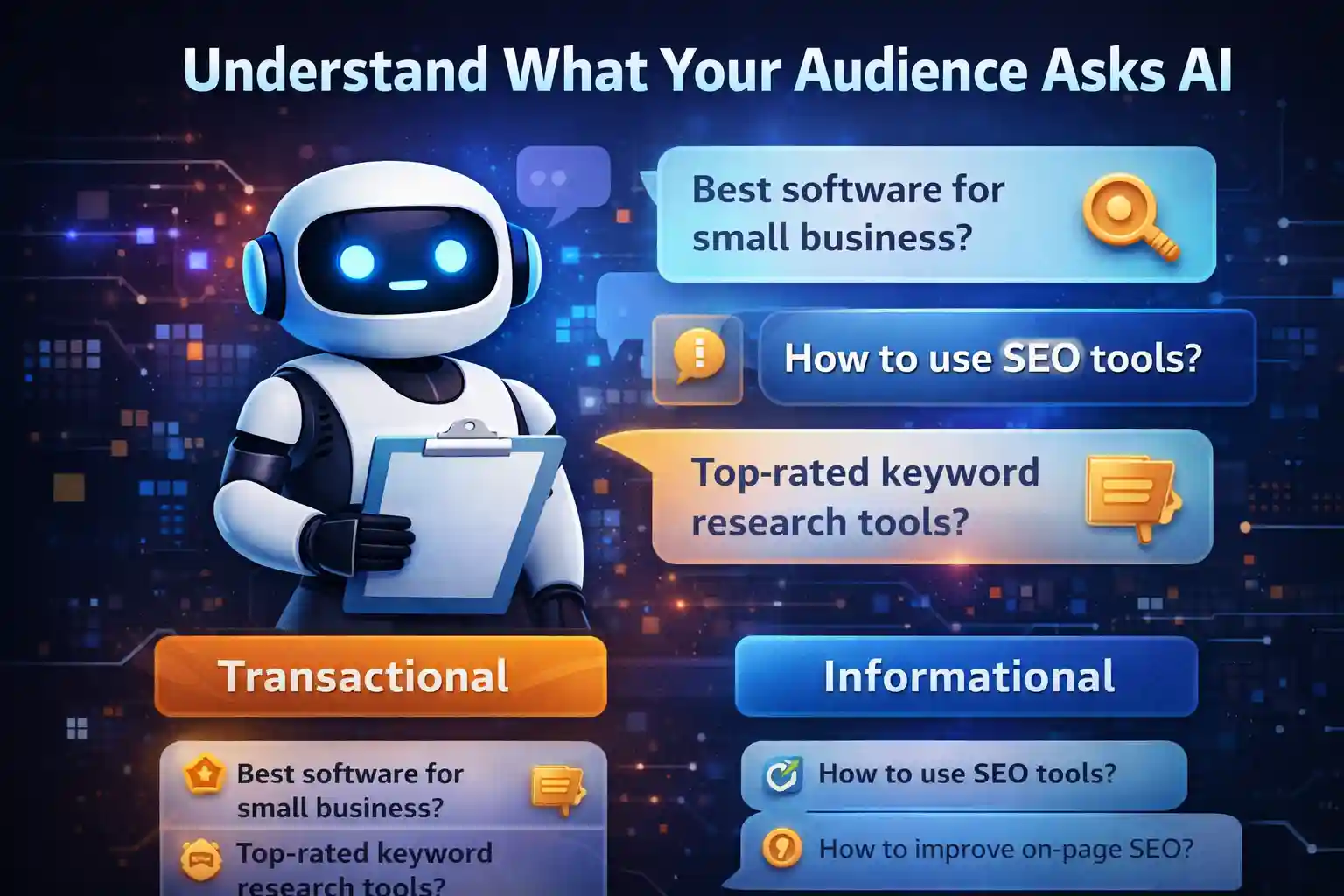
The starting point of AI SEO (search engine optimization) is understanding what the audience is asking. Previously, keyword research focused on looking at all potential keywords (or phrases) based on search volume, and then assessing the competition for those terms; however, with AI SEO we also look at user intent (specifically how users phrase their questions) as it relates to conversational search queries.
To see how much content is missing or has room to improve, track the number of times your business name appears in responses generated by the AI system based on your content.
Create a list of frequently asked questions about your product/service (by the people) and create distinct categories for them – for example, transactional (best x for y) or informational (how to...). Based on the category type, you will adjust your content according to the category type.
2. Audit Content With AI-Informed Criteria
You can conduct a content audit to evaluate your current content in response to your audience’s questions from the “What” stage of the content discovery process. Consider questions such as “Do we answer these AI-driven questions on our pages?” That is the first step — evaluating the relevance & quality of content to your audience’s questions. Following this, you would then identify those topics that require updating, further expansion, or where information is missing.
Evaluate all the pages that rank but don’t convert.
You can use DigiForBiz’s Page Comparison Tool to compare two versions of a page by reviewing how a page with higher-performance metrics differs from that of a lower-performance metric.
By evaluating content from multiple perspectives, you will increase the relevance of all content and save significant amounts of time by refining repurposed content rather than creating new content from scratch.
3. Optimize for AI-Friendly Content Structure
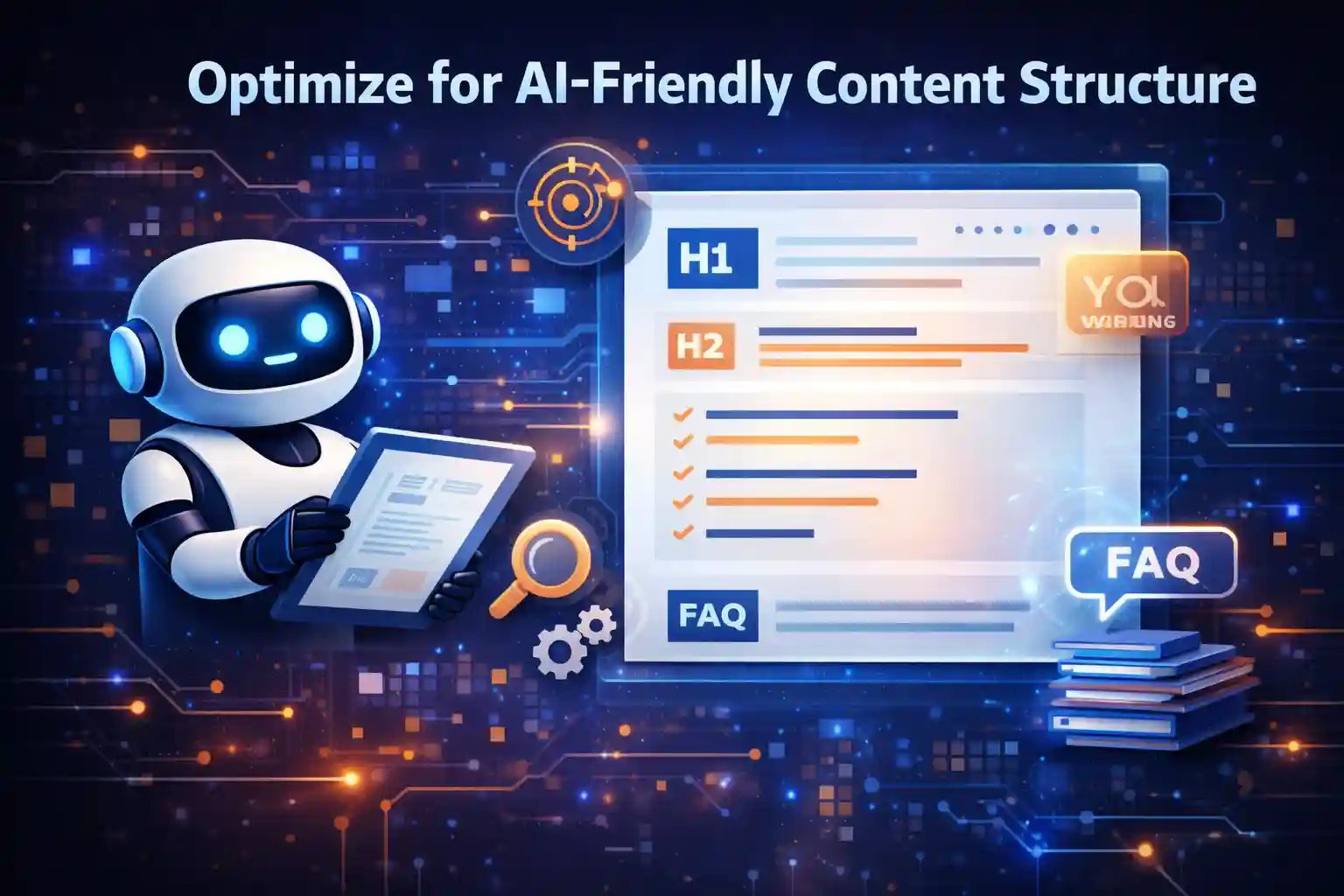
AI algorithms prioritize well-structured, semantically rich content. When you use headings, bullet lists, succinct summaries, and contextually relevant keywords, AI can evaluate your material more accurately.
To properly do this:
- Make sure each page has a clear primary theme and related subtopics.
- Make advantage of descriptive and keyword-rich headings.
- Include well-structured summaries and relevant FAQs.
By using tools like DigiForBiz’s Keyword Density Checker to look at how frequently your target and associated keywords occur, you can ensure that you’re neither over- nor under-optimizing.
When AI agents extract content based on contextual meaning rather than just specific keywords, it is especially important to strike the perfect balance between readability and semantic depth.
4. Strengthen Your Domain Authority and Competitive Position
Knowing how strong your domain is in comparison to rivals becomes crucial as AI models rely more and more on indexed web content and domain signals.
Optimizing what you don’t measure is impossible:
- To quickly compare your Domain Authority (DA) and Page Authority (PA) scores to those of your competitors, use DigiForBiz’s DA/PA Checker.
- By using these metrics, you can determine how trustworthy your website is in comparison to others and adjust your outreach or link-building tactics accordingly.
- Stronger trust and visibility are typically indicated by high DA and PA, which can affect how AI and search engines perceive the authority of your content.
This step involves identifying the appropriate growth opportunities rather than merely focusing on vanity metrics.
5. Address the Fundamentals of On-Page SEO for AI Readiness
AI models affect user expectations and query phrasing, but search engines rank pages. Thus, the principles of on-page SEO are still very important.
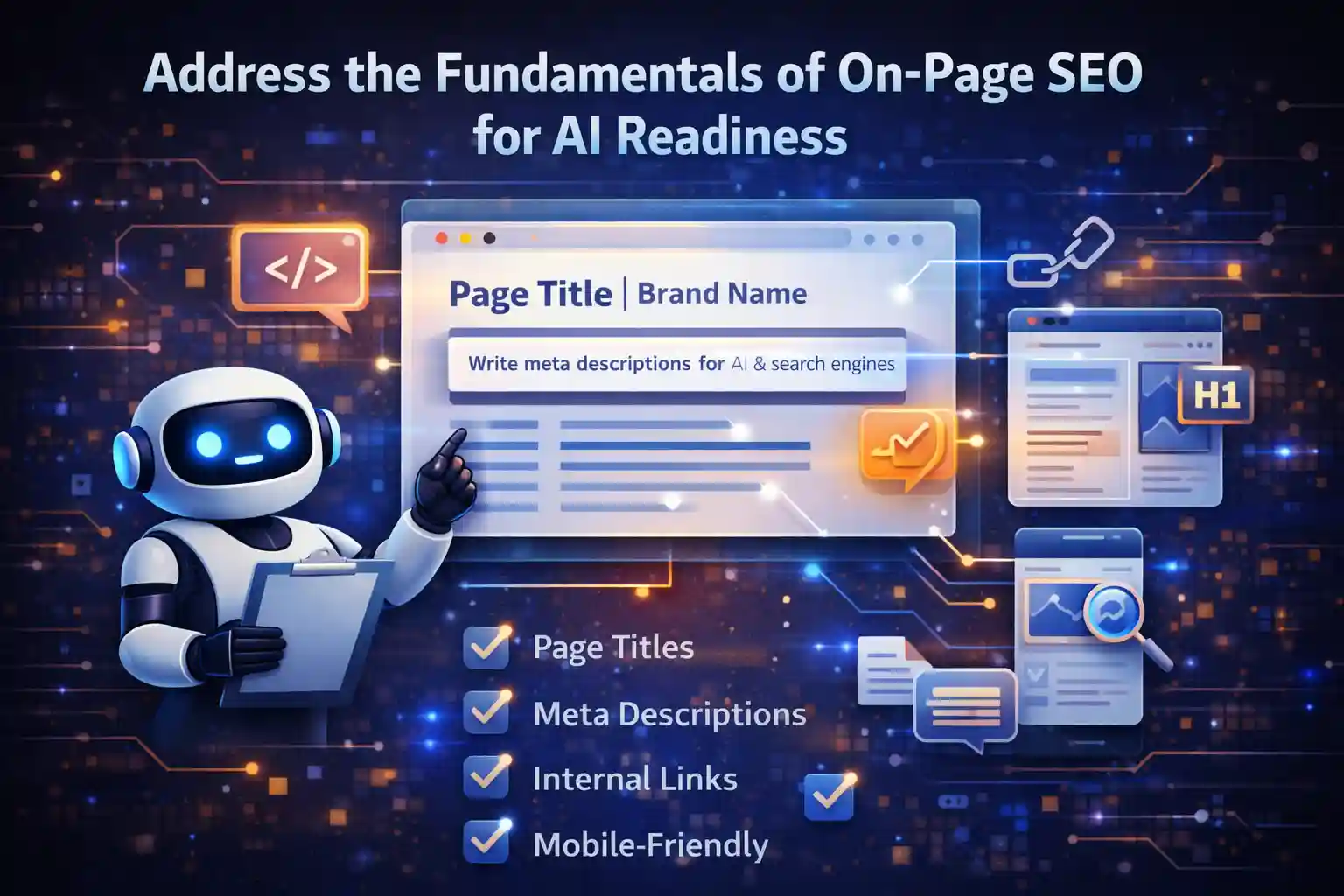
Make sure your pages have:
- Meta descriptions and descriptive title tags
- Unambiguous internal linking structure
- Mobile-friendly layouts and quick loading times
- Headers and images that are strategically placed and meaningful
In addition to standard procedure, think about responding to specific queries in content so AI can retrieve precise, succinct responses for users. Make sure structured data and schema markup are used where appropriate, particularly for articles, product information, and FAQs.
You can find out how well your page structure complies with optimization best practices using SEO tools like an SEO analyzer, keyword density checker, and page comparison tool.
6. Create the Content that AI “Prefers”
AI-friendly content is more than just text with keywords thrown in; it is comprehensive, helpful, and user-focused.
Here are some things to consider:
- Depth versus breadth: Investigate subjects in-depth rather than settling for superficial content.
- User contentment: Provide content that fully addresses the question, including any follow-ups.
- AI indicators: Because AI models interpret context rather than exact repetition, use synonyms and related terms naturally.
For instance, instead of writing a brief list of advice, create comprehensive guides that also address any related issues users may have, thereby addressing the full range of intent behind a query.
While the Page Comparison Tool demonstrates how top-ranking pages better organize their content, tools like Keyword Density Checker aid in maintaining balance.
7. Track, Measure, and Iterate
AI SEO requires ongoing updates because it functions as an ongoing process instead of a finished product.
The analytics process serves its purpose at this point.
- Your analytics tool should be used to separate AI referral traffic into distinct segments which include voice search and AI integrations.
- The system enables users to track performance development throughout the different pages of the website.
- The rankings together with user engagement and conversion metrics should be used to determine the necessary content changes.
The combination of regular audits with automated SEO tools enables you to detect content which requires enhancements and discover emerging AI trends.
8. Integrate AI With Your SEO Workflow
Using AI alongside your SEO strategy will not only make it easier to come up with new ideas, create drafts and optimise ranking but also help with your strategic thinking about whether or not to use the information created by an AI tool.
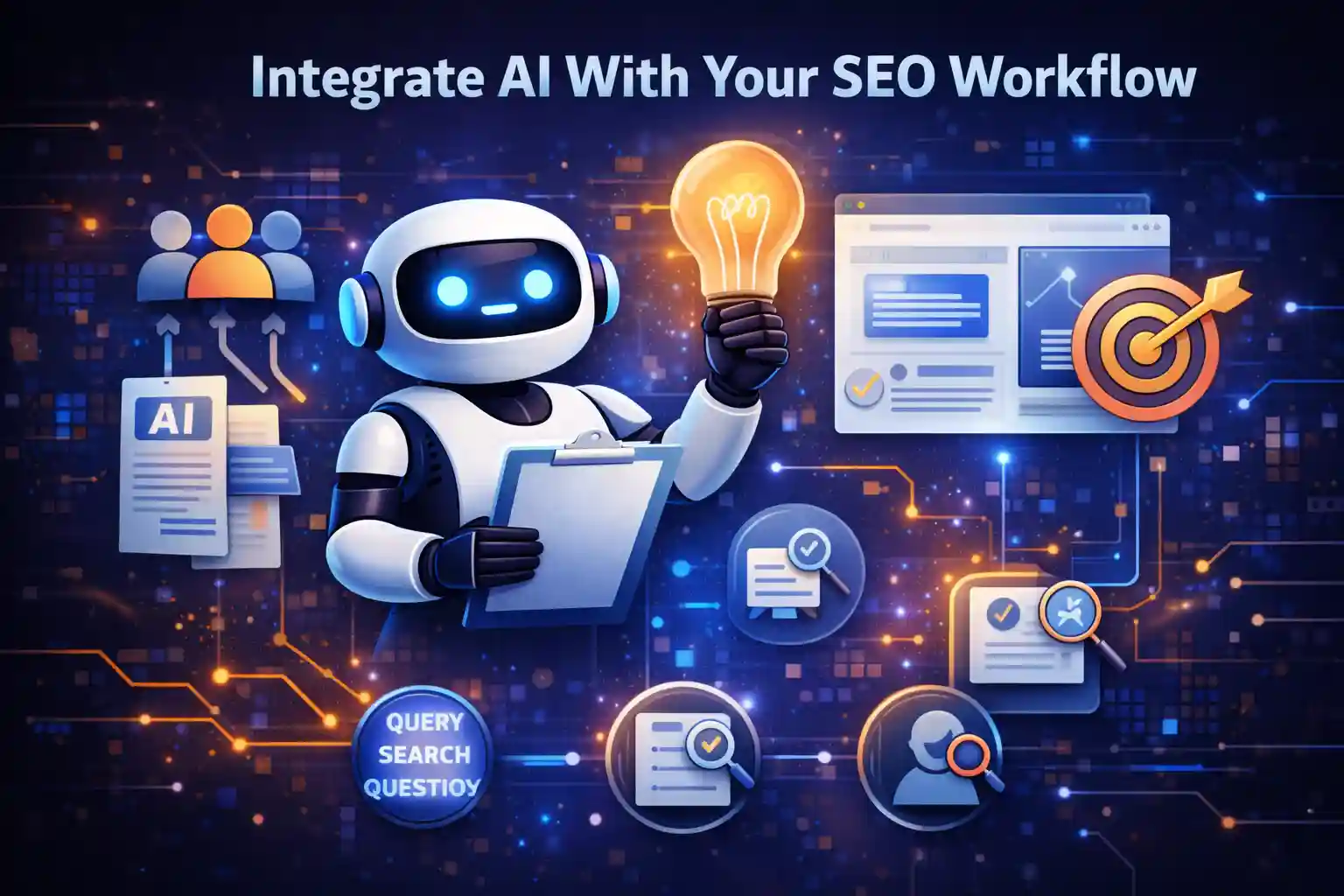
There are three ways to incorporate AI tools into your SEO strategy:
- Using AI Tools to generate variations of search queries,
- Verifying the quality of the content produced using AI Tools in order to determine size and relevance for the market you are targeting.
- Ensuring that all AI-generated content is reviewed by a human for the same reason as the first two items.
Although AI-generated content can be beneficial to the SEO professional, it does not replace the need for human expertise in making these same decisions. The foundation of SEO success continues to be great content that attracts and informs readers.
Also read: What is SEO and How It Works in 2026 — A Detailed Guide
Final Thoughts
In 2026 and beyond, search engines will be shaped by not only AI as a tool but more so the way users search and find information. As such, the use of AI models will continue to be integrated into search engines and require more extensive semantic knowledge, increased user insight, and sufficient amounts of relevant content that deliver answers to the user more effectively.
In order to keep pace with the changing environment of the internet, it is crucial to have a structured AI SEO checklist; rather than falling behind the competition, you can stay ahead of the trend.
Strategies are essential; however, having the right tools allows you to implement the strategy much quicker and with greater accuracy. AI SEO is much more than just ranking higher; rather, it is about aligning your content to align with how AI interprets user intent as well as understanding and interpreting the context of users’ queries via conversational search.
About The Author