


In today’s digital age, visibility matters most. Regardless of whether it is about starting another website, popularizing your business blog, or expanding your e-commerce site, there are always certain factors that are true. In other words, when your users cannot find your sites, there are always chances of losing opportunities. This, in turn, brings about another popular buzz word, i.e., Search Engine Optimization or ‘SEO.’ In simple terms, it can be said that ‘SEO’ includes measures that are part of optimizing your sites so that they can be found, read, and indexed on search engines that are popular, such as Yahoo, Bing, or Google.
This guide will help you with understanding what SEO is, how it is done step-by-step, why it is important, and even show you how you can use handy tools to improve your performance in search results.
What Is SEO (Search Engine Optimization)?
SEO, or Search Engine Optimization, is basically an overall term for various approaches, practices, and strategies that can be used to ultimately enhance the visibility of a website within organic search engine listings. The concept behind all these is actually very simple: “How can I generate more traffic from search engines for free by ranking for certain words that people search for, but that apply to me too?”
SEO is very different from paying advertising, such as Google AdWords, which appears only when you pay an ad placement fee. Instead, SEO helps your pages achieve a natural ad placement.
How Do Search Engines Work?
In order to grasp the concept of how SEO works, you should first understand the functioning of a Search Engine. Search engines, like Google, maintain complex technologies for searching, indexing, and ranking web pages. The functioning of a Search Engine can be described as follows –
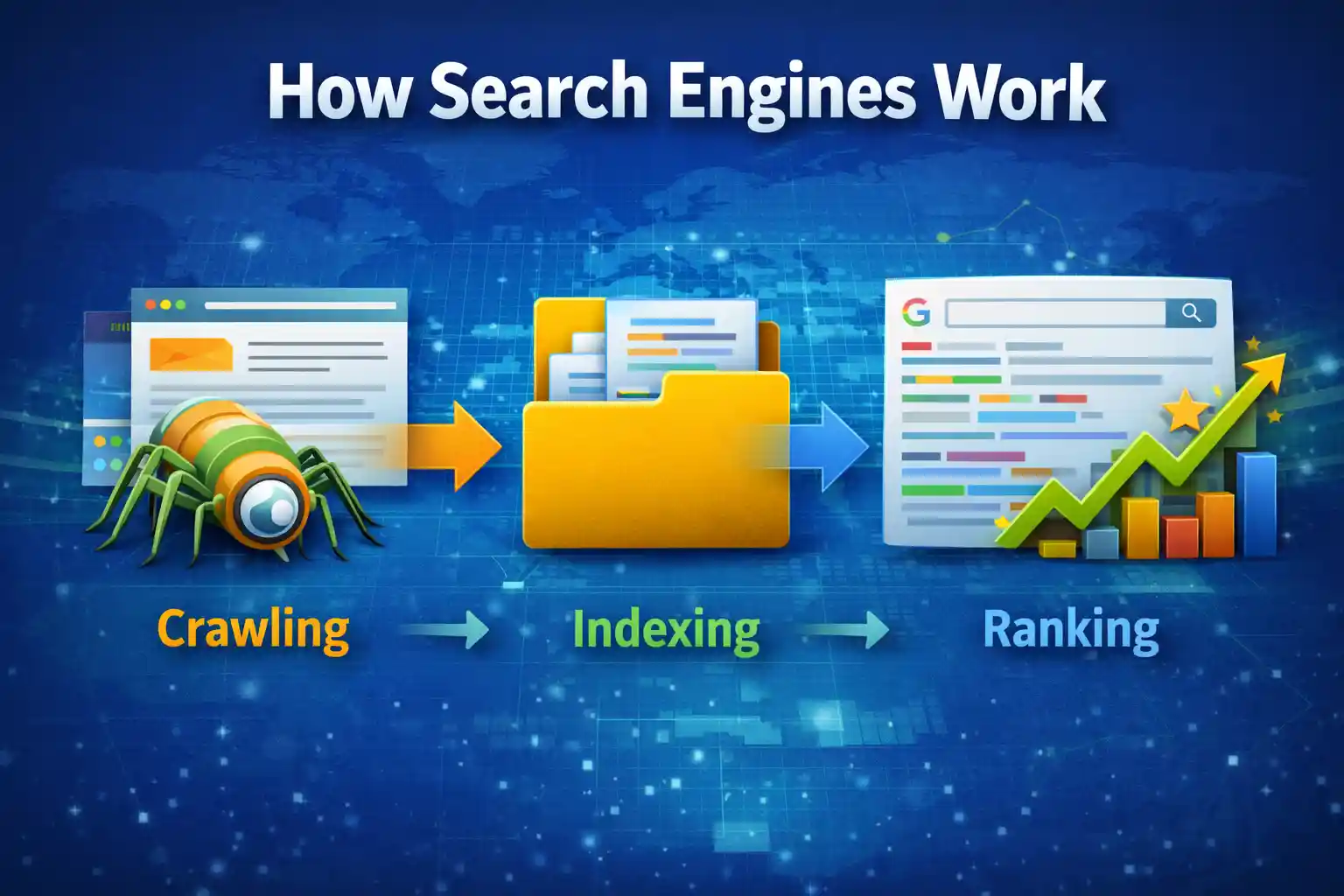
- Crawling
Usually, the search engines employ automated “bots,” commonly referred to as “spiders” or “crawlers,” sent out across the internet with the intention of searching its various pages by following hyperlinks from one page to another.
- Indexing
Once a page is discovered, Google proceeds by examining the content of the page and enters it in a huge index. Some people refer to this concept as a huge digital library.
- Ranking
For a user to look for something on the internet, a search engine will use its index to rank relevant results for maximum usefulness to the user. The rankings are influenced by many elements ranging from user experience to site performance.
The above basic ideas will definitely assist in incorporating SEO into all aspects of your website strategy.
Why Does SEO Matter?
SEO Isn’t Optional; It’s Essential. Here’s why:
- Though organic traffic is the largest source of click traffic, most people ignore the advertisement section, focusing mainly on the first organic search results.
- Being highly ranked is important for establishing trust – users trust search engines, so ranking high is equivalent to being authoritative.
- SEO can give long-term value, such that any page that is optimized will bring traffic for many, many years.
- Sites with good SEO are fast, user-friendly, and useful, and hence improves the user experience.
In other words, a good SEO strategy will make your content more discoverable, and more desirable to your visitors, hence the increased traffic and positive outcomes.
E-E-A-T and Trust Signals in SEO
Search engines evaluate content quality using E-E-A-T—Experience, Expertise, Authoritativeness, and Trustworthiness. Strong trust signals include clear author information, real-world experience, transparent business details, authoritative references, and secure websites.
Websites that demonstrate credibility and subject-matter expertise consistently perform better, especially for informational and business-related queries.
What are the Core Components of SEO?
Effective SEO is a blend of several practices that work together to help a website to get better rankings. Here are some of the core components:
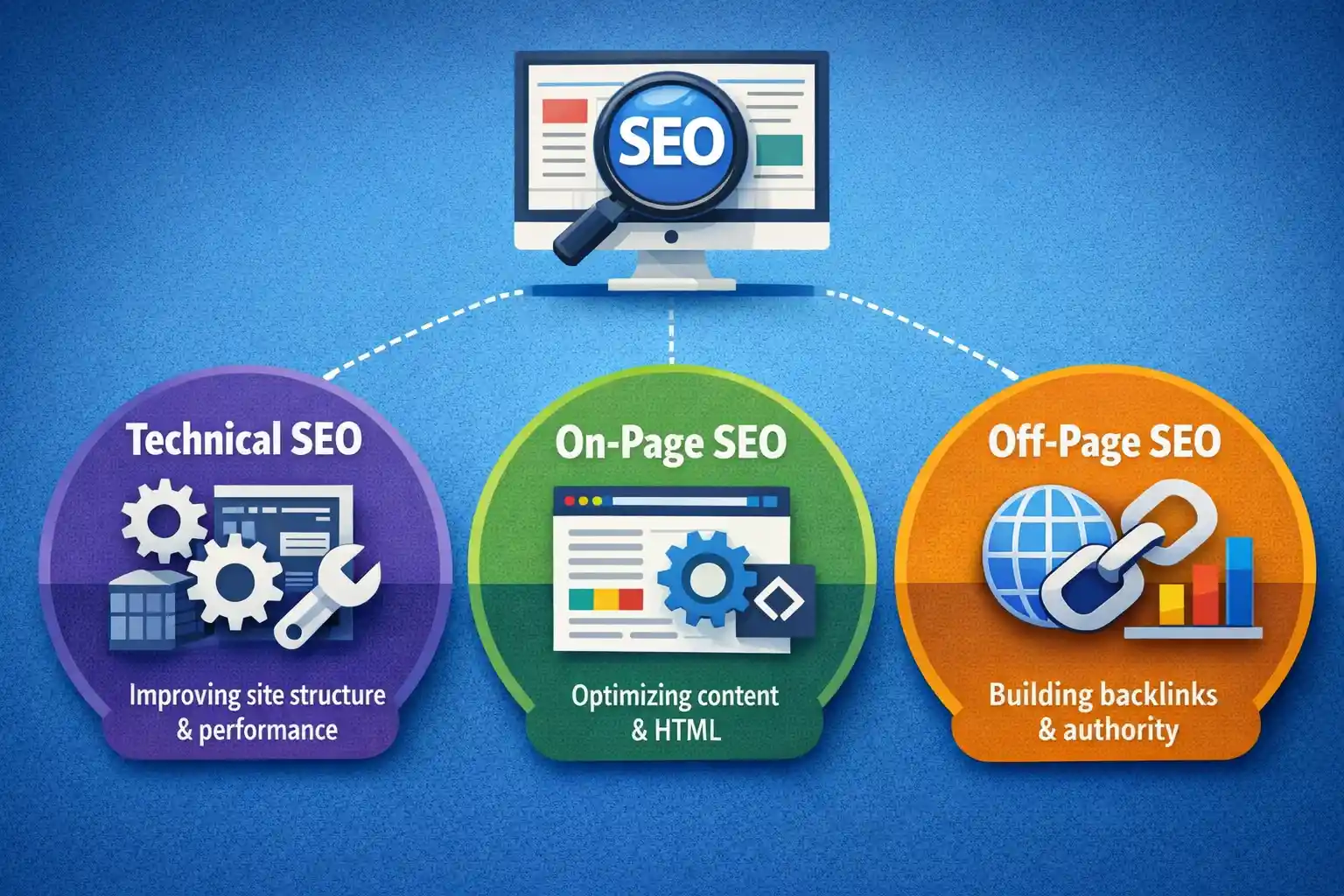
- Technical SEO
That’s the starting point. This step will ensure that your website will be found and crawled correctly by search engines.
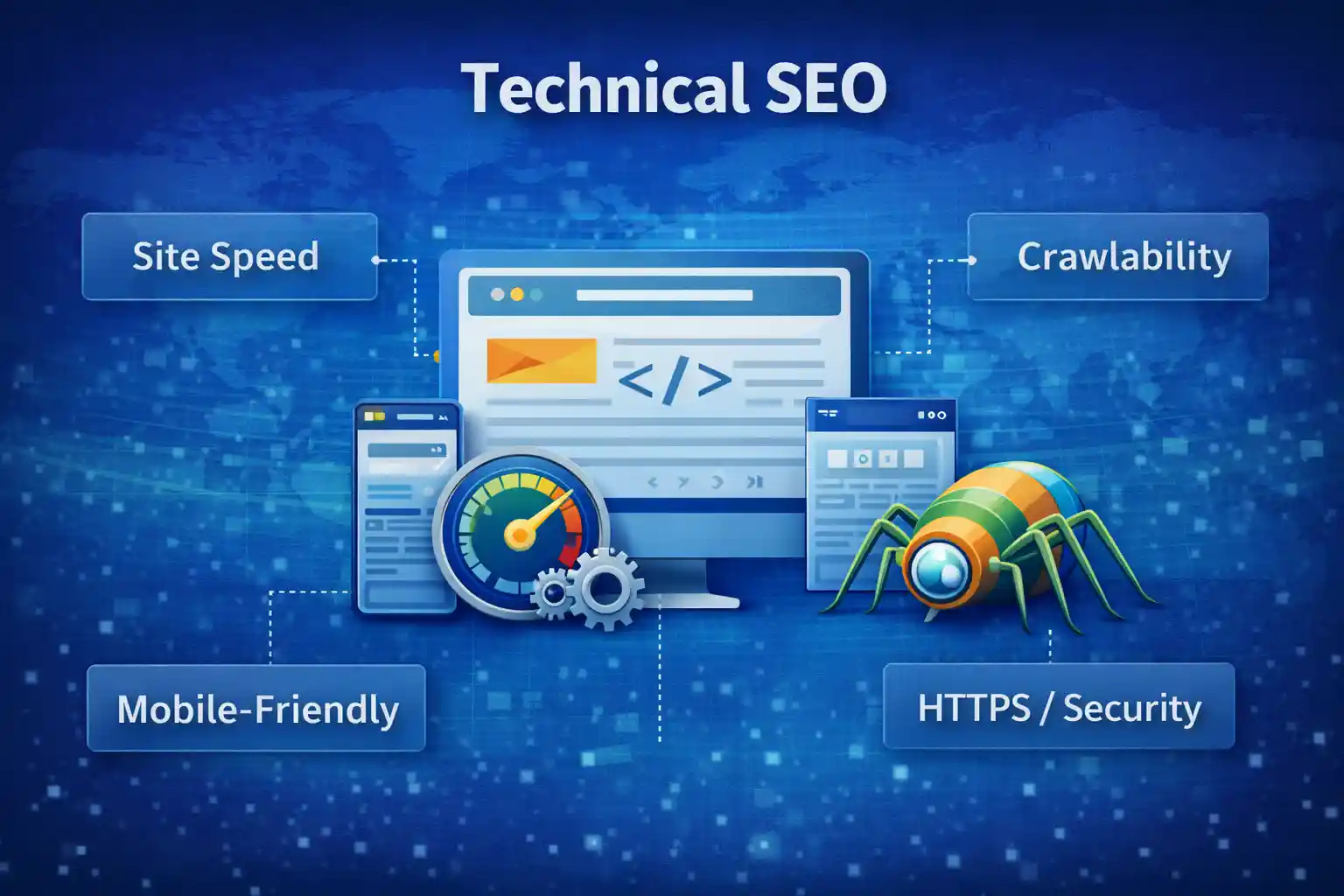
At this stage, technical SEO includes:
- Site speed and mobile-friendly design
- Optimizing page experience not only improves rankings but also increases engagement and conversion rates.
- Proper URL structure
- Crawlability and Indexing
- XML sitemaps
- Robots.txt rules
Tool Tip: Create customized robot instructions for search robots with the help of the DigiForBiz Robots.txt Generator, which determines what the robots should crawl or avoid crawling for full optimal results.
- On-Page SEO
On-page SEO is the practice of optimizing individual pages so they stand out for the search engines as well as for the end user.
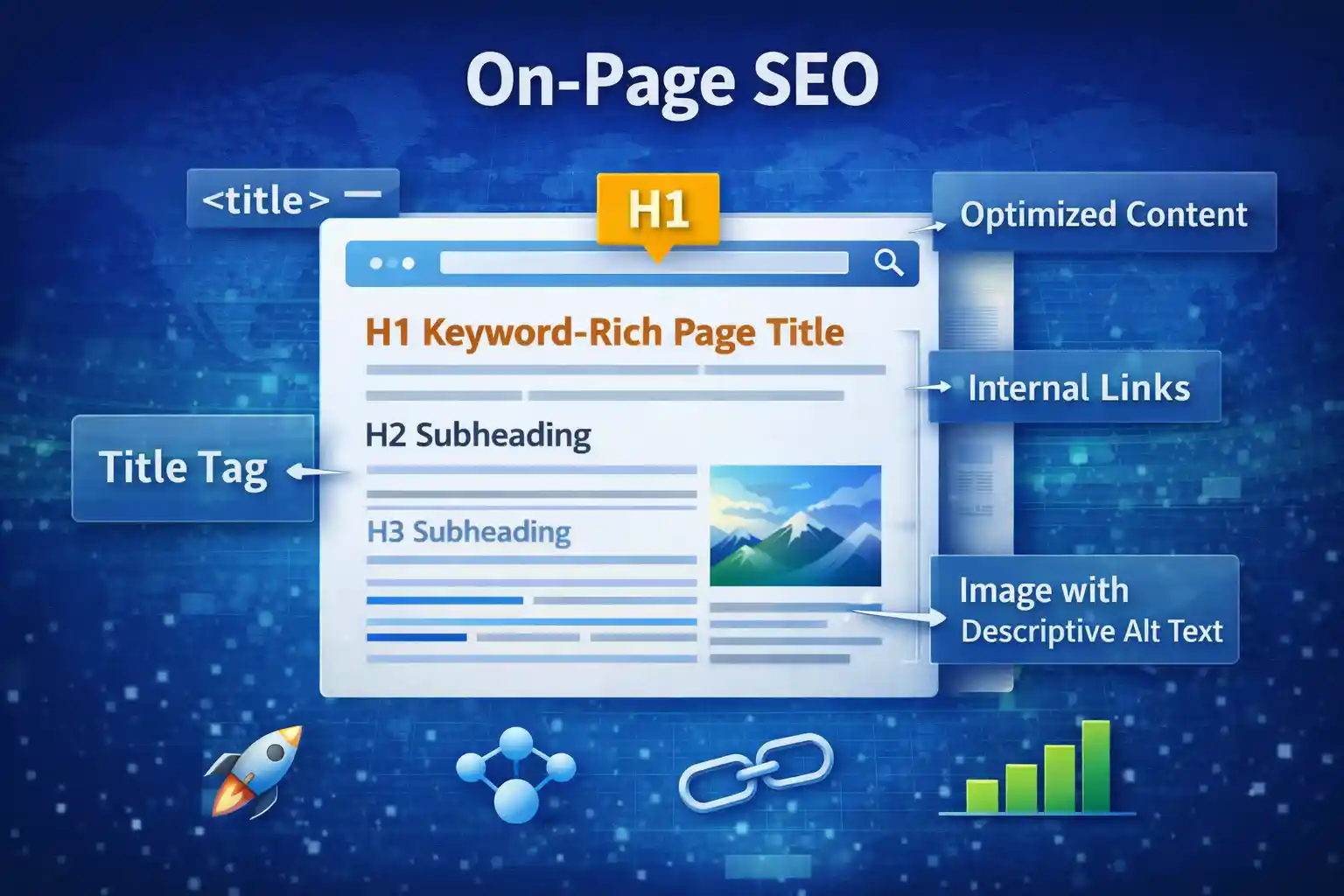
This includes:
- Keyword Research: The search words that your customers are looking for.
- Content Optimization: Creating content that matches user intent.
- Meta Tags: Effective title and description writing.
- Header Tags (H1, H2, H3) and the structured content.
- Internal Linking and Content Structure: Internal links help search engines understand page relationships, distribute authority, and improve crawlability. Use descriptive anchor text and organize related content into topic clusters around core pillar pages for better SEO performance.
- Image Optimization: Using Descriptive alt Text.
Tool Tip: Give DigiForBiz Meta Tester a try, as it can assist you in optimizing your titles and meta descriptions before publishing your pages.
- Off-Page SEO
Outside factors that affect the search rankings include mainly backlinks. These are incoming links from other domains to your website. Top-quality backlinks serve as votes of trust and can increase your authority and rankings.
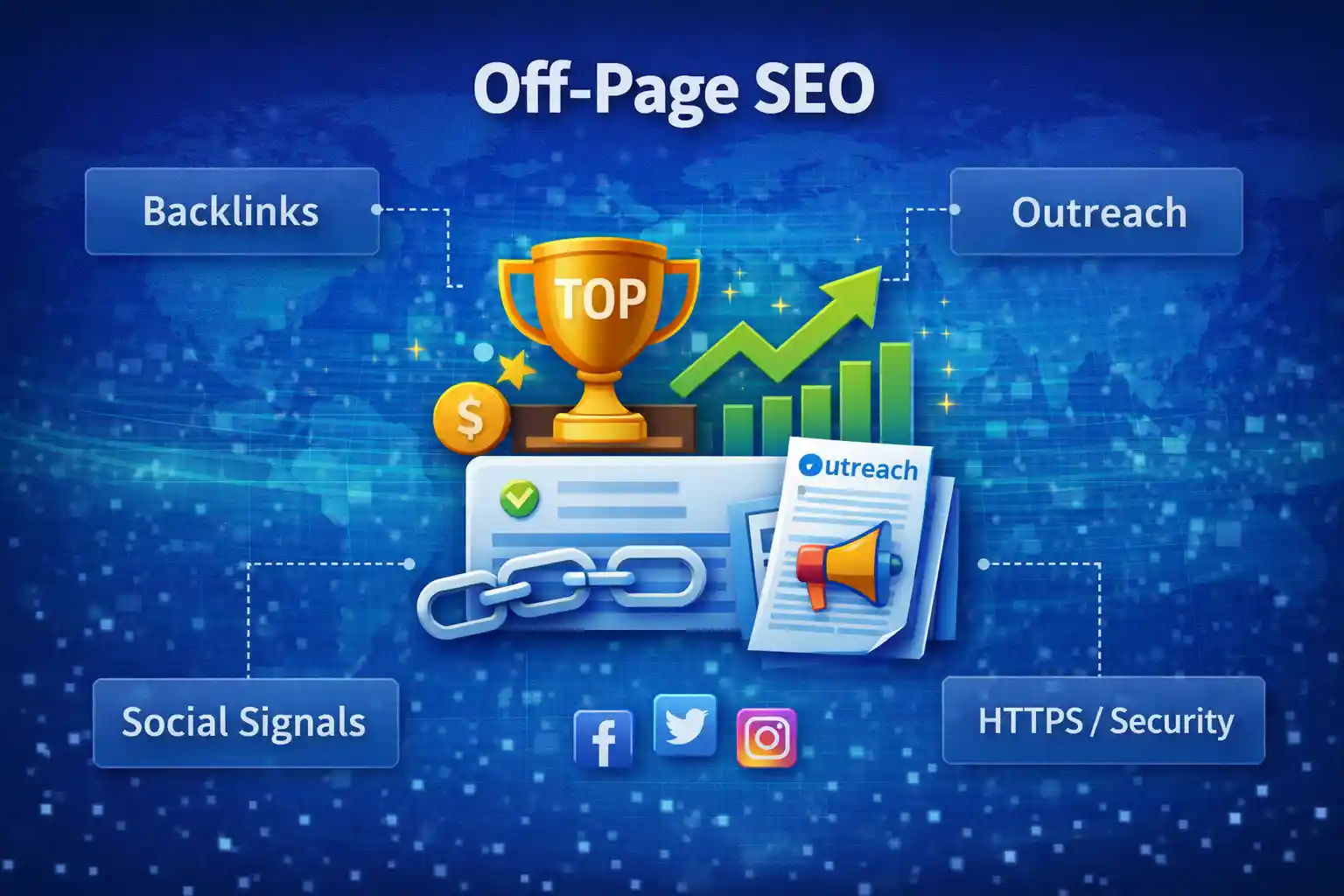
Strategies here include:
- Guest posting on authoritative sites.
- Natural link outreach.
- Social sharing and content promotion.
- Building partnerships and digital PR.
Note: Though backlinks are generally very useful, quality always matters over quantity. A few high-authority, relevant links will outperform many low-quality ones.
How Does SEO Work in Practice?
SEO is not a one-shot process but has to be done continuously. The process is as follows:
- Keyword Research
To start with, one would want to determine the audience it is searching for by using any keyword research tool available in the market. The idea is to target keywords that have sufficient ranking potential.
- Understanding Search Intent & SERP Analysis
Ranking for a keyword is not just about volume, it is about intent. Search intent defines why a user is searching. It generally falls into four categories: informational, navigational, commercial, and transactional.
Before creating content, analyze the top-ranking pages for your target keyword. This reveals the format, depth, and angle Google prefers. Matching content type and intent significantly improves ranking success and reduces bounce rates.
- Content Creation
Once you know your target keywords, generate text relevant to user search, including subtopics, structure, headings, and the use of multimedia resources. You can then optimize for Readability & User Engagement. The better the content, the longer a user spends on a webpage, and this is a positive signal to search engines.
- On-Page Optimisation
That is where your content, search, and signals come together. You can insert primary keywords naturally in titles, headings, and texts. You can then utilize matching words to expand its pertinence, and the images can also be optimized with an alt text.
Tool Tip: Leverage DigiForBiz Image Converter to ensure your images are compressed for better speeds — crucial to SEO & user experience!
- Technical Clean-Up
Ensure that your site is technically healthy. Provide an XML sitemap that your search engine can use to understand your site structure. You can also use the DigiForBiz Sitemap Generator to Ensure Site Speed and Mobile Friendliness, fix broken links, and use proper robots rules.
- Link Building
Focus on creating linkable content such as research material, comprehensive guides, or tools to easily obtain backlinks, or try ethical outreach to build links and connections. Remember, this can work more effectively with good content.
- Structured Data and Schema Markup
Structured data helps search engines better understand page content and enables rich results such as FAQs, reviews, and breadcrumbs in search listings.
Implementing schema markup improves visibility, click-through rates, and relevance in both traditional search results and AI-driven answer engines.
Note: Always make sure to use a schema validator to make sure the added schema is correct.
- Content Freshness and SEO Maintenance
SEO does not end after publishing. Updating existing content with fresh data, improved clarity, and new insights helps maintain rankings and prevents content decay. Regular content audits often deliver faster SEO gains than creating new pages from scratch.
9. Monitoring and Analytics
SEO is a constantly evolving field. Always monitor your performance with tools like Google Analytics & Google Webmaster Console. Keep track of:
- Impressions and clicks
- Keyword rankings
- Bounce rates
- Top performing pages
You should use Insights for refinement and improvement regularly.
Authority Matters: Domain Authority and Page Authority
When it comes to measuring SEO strength, metrics commonly used include Domain Authority, also known as DA, and Page Authority, or PA. These are known as third-party metrics that are used to measure or predict how a particular domain or page will likely perform in a search engine. The DigiForBiz DA/PA Checker can provide instant insights to check your domain & page authority, allowing you to compare your site with your rivals.
How Long Does SEO Take to Work?
While paid advertising can promise instantaneous results, SEO takes a longer period of time.
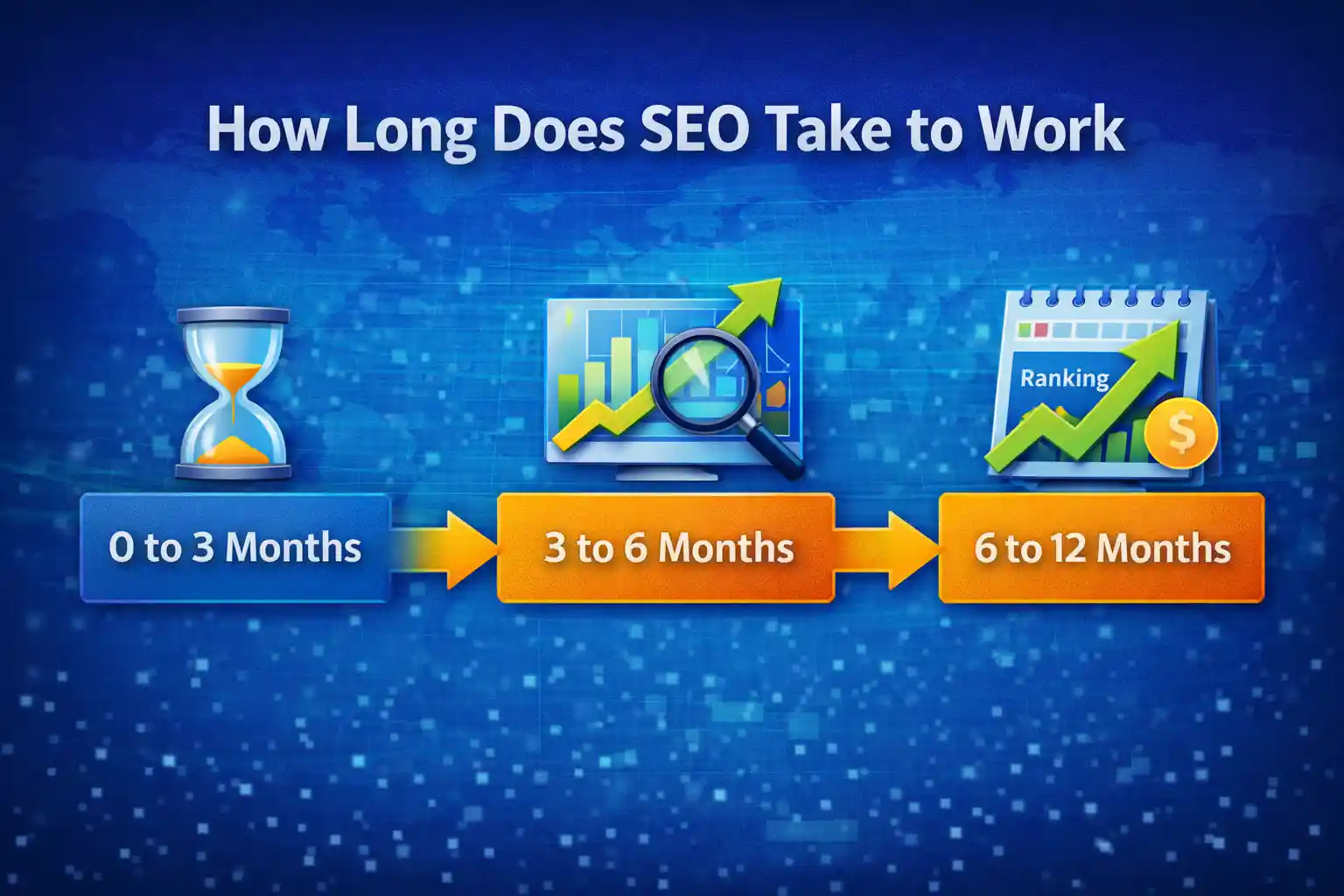
Normally,
- 0–3 months: Setup, technical fixes, and content improvements.
- 3–6 months: Initial improvement in search rankings and traffic.
- 6–12+ months: Strong visibility for competitive keywords.
SEO is an investment in the long run. Once your content becomes popular, you’ll continue to reap the rewards for months or even years to come.
Common SEO Mistakes That You Can Avoid
Here are some of the most common SEO mistakes that you can avoid to help your website rank better:
- Ignoring mobile and speed optimization.
- Keyword stuffing.
- Publishing thin, low-value content.
- Focusing on any backlinks instead of good ones.
- Forgetting to track performance.
Correcting these issues often yield measurable improvements. Search engines are also evolving. For example, traditional search engine optimization is no longer cutting edge, modern trends such as artificial intelligence-generated optimization, answer engine optimization, and structured data optimization are becoming increasingly important. Meanwhile, the fundamental idea remains unchanged: “enable search engines to understand your content, so that people can derive value from that content.”
SEO for AI Search and Answer Engines
Modern search engines increasingly rely on AI-generated answers and summaries. Structuring content clearly, answering questions directly, and using semantic headings helps your pages perform well in AI overviews and answer-based search experiences.
SEO is evolving from keyword optimization to entity and intent optimization.
Conclusion
SEO is About Relevance, Quality, and Authority, and is an important marketing discipline to increase organic presence. SEO brings together the technical underpinnings, the relevance of the content to users, and external credible signals to increase the presence of your website.
By using proper tools mentioned in this article, all aspects of SEO can be perfected.
SEO isn’t about tricks; it’s about aligning your content with user intent and what search engines consistently reward.
About The Author